

27 Apr Salome’s Story: When a Seven Year Old Takes Training Seriously
By Klint Ostermann
She Was Seven Years Old When She Changed Everything
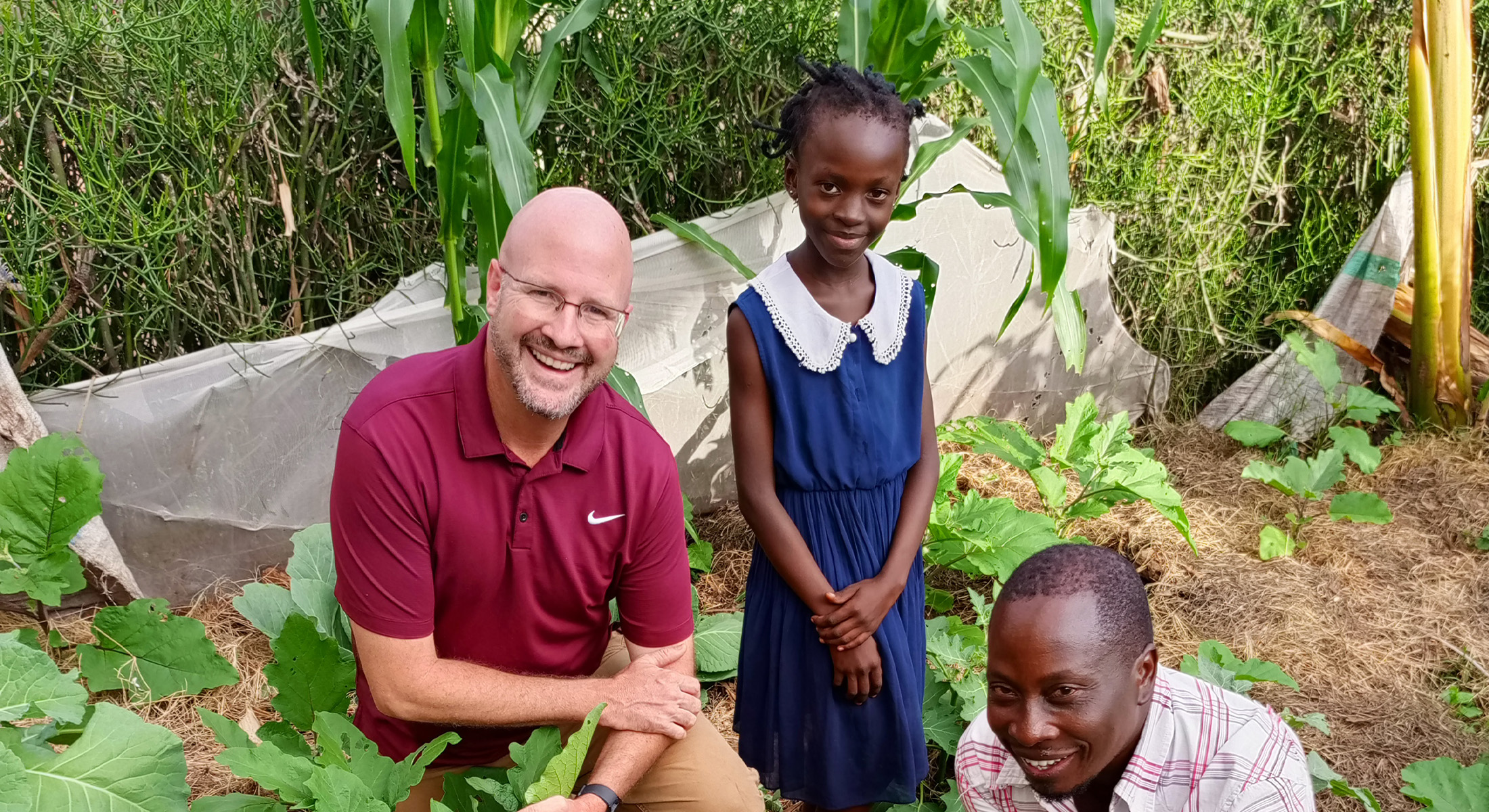
The first time I met Salome, she was beaming! She grabbed my hand and pulled me toward her garden, talking the whole way, telling me how many tomatoes she had harvested, how well the beds were producing, how Farming God’s Way actually works. She was seven years old, and she already knew it was true because she had already seen the proof.
Kasese sits on the border of the Democratic Republic of Congo, a region where poverty isn’t an abstraction. It’s the soil families work with their hands, the harvest they depend on and the daily decisions made between feeding children and everything else. Salome’s mother had come to a Farming God’s Way training because she wanted something better for her family, and she brought her daughter along.
What happened next is the kind of story that makes you stop and remember why this work matters.
A Child Who Took It Seriously
The training Salome’s mother attended was led by Uzziah, a man I had the privilege of training myself. Uzziah took what he learned and carried it back into his community in Kasese.
That is exactly what Farming God’s Way is designed to produce: not attendees, but trainers. Not people who receive, but people who multiply.
Salome sat through the entire training. She watched the demonstrations. She paid attention to the permanent beds, the mulching, the intentional spacing, the careful stewardship of every square foot of ground. And when it was over, she didn’t go home and file it away as something interesting she had seen once.
She put in her own garden.
Not a pretend garden. Not a child’s experiment. A real Farming God’s Way garden, laid out with care, mulched and maintained the way she had been shown. She worked it faithfully. And it produced!
“Train up a child in the way he should go; even when he is old he will not depart from it.” Proverbs 22:6
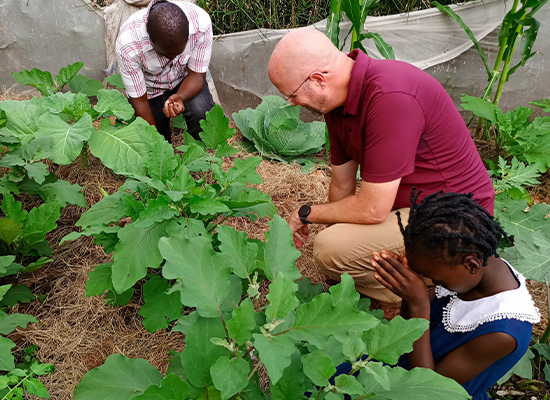
She Saw the Fruit, and She Couldn’t Stay Quiet
There is something that happens when a person applies what they have been taught and sees it work. It doesn’t just produce food. It produces conviction. Young Salome saw her garden grow, and she became one of the most passionate promoters of Farming God’s Way in her community. Not because anyone told her to, and not because she was paid to spread the word, but because she had done the work and seen the results with her own eyes.
That is exactly what we hope for every person who walks through a Sow Hope Farms training. Not passive recipients. Not people waiting for the next handout. But equipped, convicted men and women–and apparently children–who go back to their communities and multiply what they have learned.
But what struck me most was this: what Salome learned in that garden did not stay in the garden. The discipline she developed tending her beds, the confidence that came from seeing her work produce real results, the conviction that faithful effort leads to genuine fruit– those things overflowed into every area of her life.
A garden became a classroom for character. And the lessons she learned there followed her everywhere she went.
Head Girl
Salome is now the Head Girl of her primary school.
For those unfamiliar with the term, Head Girl is not a ceremonial title. In East African schools shaped by the British education tradition, the Head Girl is one of the highest positions of student leadership available. She is selected by the school’s staff, not elected by popularity, for being responsible, mature and committed. She represents the school at official events, assemblies and community gatherings. She acts as the primary voice connecting students to school leadership, and she is expected to set the standard for how every other student carries themselves. It is the kind of role you earn through who you are, not the kind you are handed.
Salome earned it.
Think about what that means. A girl who was seven years old when she sat in a Farming God’s Way demonstration garden, who went home and built her own garden and worked it faithfully, who couldn’t stop telling people about how well it worked, is now the recognized leader of her entire school. The character she built in that garden, the follow-through, the willingness to act on what she had been taught rather than simply hear it, did not stay in the garden. It shaped who she is becoming.
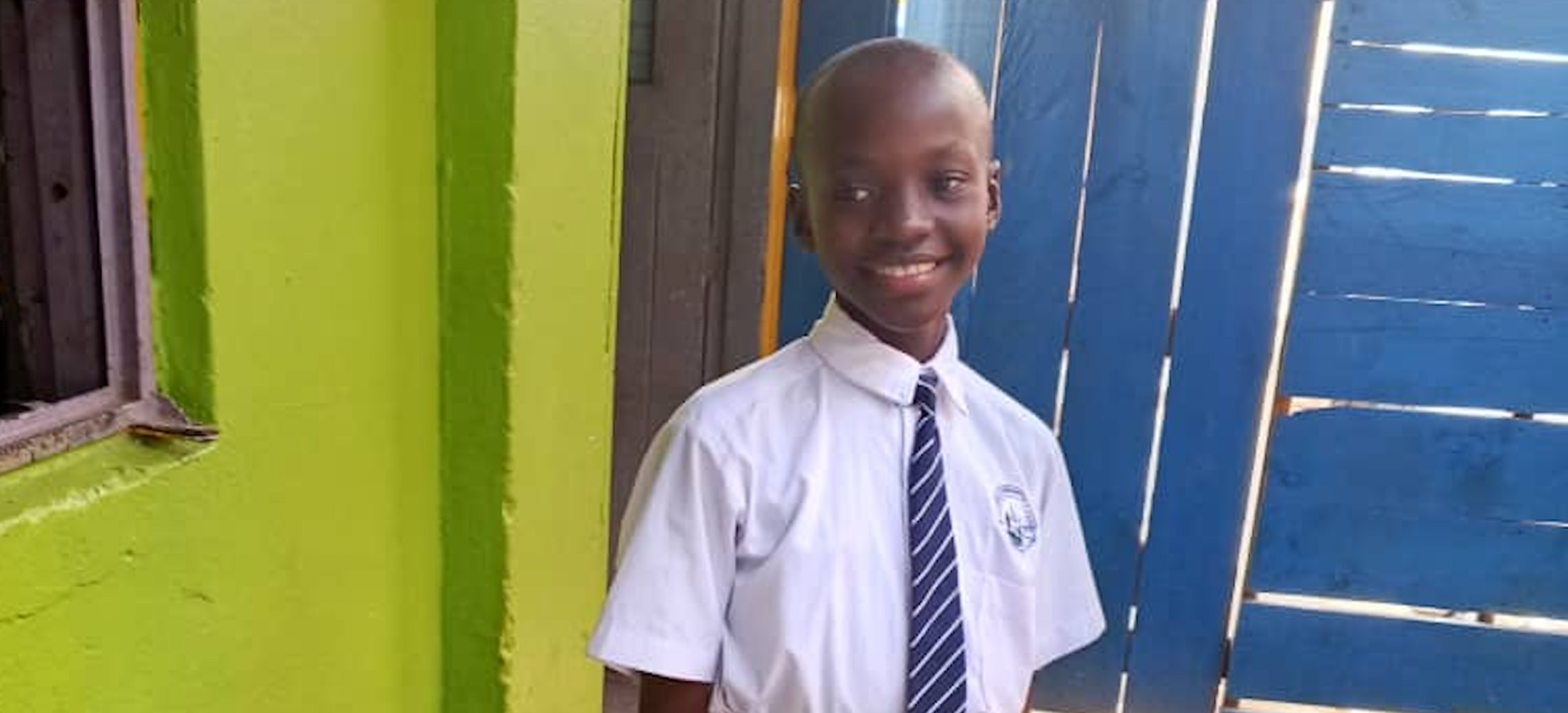
This Is What Multiplication Looks Like
Sow Hope Farms does not measure success by how much food we produce. We measure it by people equipped, leaders deployed and impact that multiplies. Salome’s story is a picture of that multiplication at three levels.
I trained Uzziah. Uzziah trained Salome’s mother. Salome’s mother brought her daughter. Her daughter went home and planted a garden, told her community about what she had learned and grew into the kind of leader her school trusts to represent them.
Nobody engineered that outcome. It happened because the training was real, the method was transferable and a seven-year-old took it seriously enough to act.
Jesus described the Kingdom this way: “The kingdom of heaven is like a grain of mustard seed that a man took and sowed in his field. It is the smallest of all seeds, but when it has grown it is larger than all the garden plants and becomes a tree, so that the birds of the air come and make nests in its branches” (Matthew 13:31-32). A small seed, faithfully planted, grows into something that shelters others. That is Salome’s story. And it is the story we are working to tell across Uganda and, soon, the United States!
God’s People Should Never Be Sent Unprepared
Salome’s mother was not sent unprepared. She received real training in a real demonstration garden from a man who had been trained and sent himself. She came home equipped and the ripple effect of that one training is still unfolding in ways none of us could have predicted.
That is what Sow Hope Farms exists to do. Not to create dependency or deliver aid, but to train and deploy people who will go back into their communities and multiply what they have learned, with biblical conviction and practical excellence.
The harvest is plentiful. The laborers need to be equipped.
Would you join us in making sure more mothers like Salome’s, and more daughters like Salome, are given real tools and real training? Give today and be a sower of hope.